Now Reading: Brattleboro Select Board settles on roughly $27M budget, with 6.2% tax increase proposed
-
01
Brattleboro Select Board settles on roughly $27M budget, with 6.2% tax increase proposed
Brattleboro Select Board settles on roughly $27M budget, with 6.2% tax increase proposed

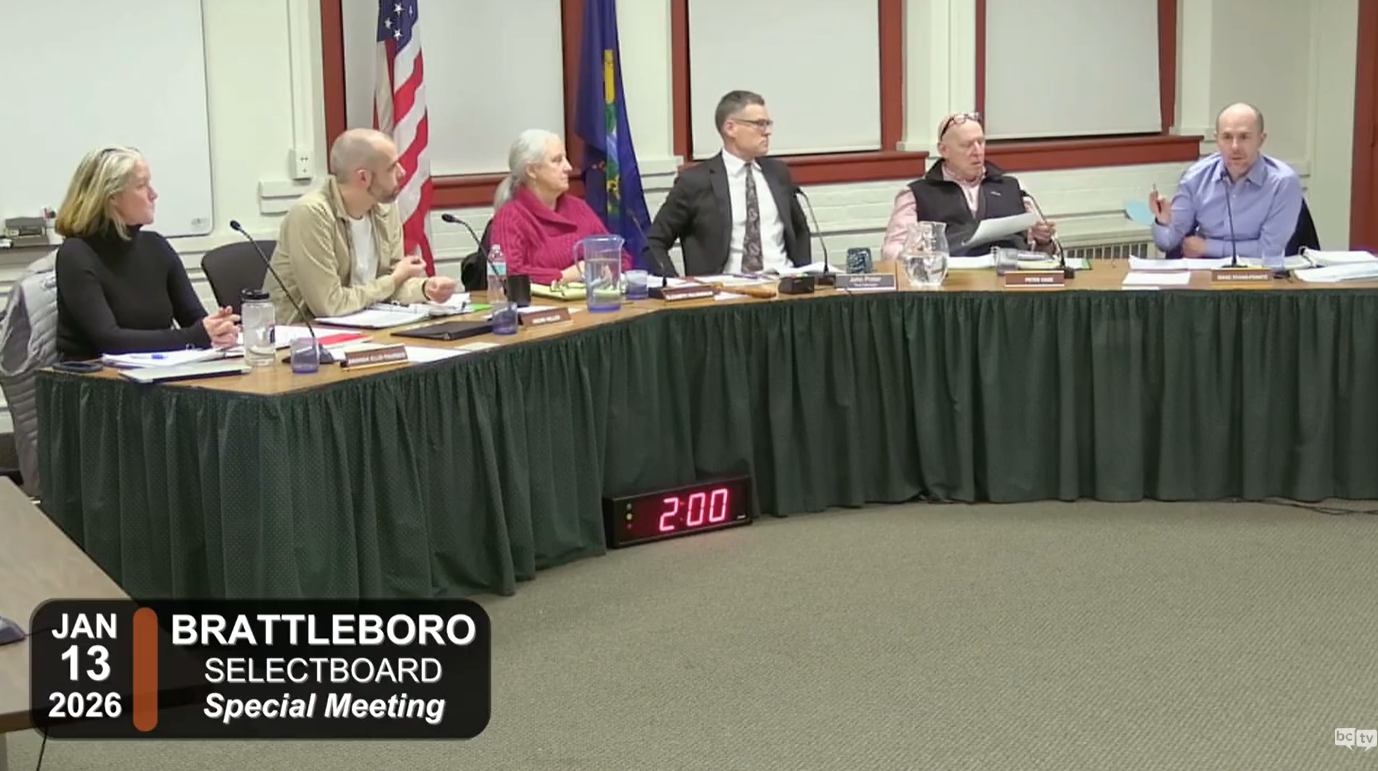
BRATTLEBORO — After a special meeting Thursday marked by extended debate and last-minute revisions, the Select Board agreed on an approximately $27 million municipal budget to send forward for the next fiscal year.
The spending plan would raise the town tax rate by about 6.2% compared with last year. Board members Amanda Ellis-Thurber and Isaac Evans-Frantz opposed the final version. The budget now heads to Representative Town Meeting or Town Meeting, depending on the outcome of a March ballot question on whether RTM will continue.
Staff suggested deeper cuts to get under 6%
Town Manager John Potter said staff were asked to produce an option that brought the year-over-year increase below 6%. The alternative proposal would have lowered the increase to about 4.7%, primarily by ending Brattleboro’s curbside recycling pickup through Casella Waste Systems and dropping a new municipal compost collection program.
That package was projected to save about $577,682. Under the concept, residents would have received a subsidy covering half the sticker cost to dispose of compost and recycling at the Windham Solid Waste Management District, with backyard composting and private hauler contracts also discussed.
In the end, the board voted 4–1 to keep curbside recycling and compost in the budget. Vice Chair Oscar Heller said the board had pushed the budget as far as it reasonably could while still maintaining a majority.
“We are reaching the limit of the things we can do to this budget that this board can find a majority agreement on,” Heller said.
Evans-Frantz argued against removing curbside collection, saying the town should search for other reductions instead of cutting an entire service. Ellis-Thurber also said she could not support the final proposal and urged the board to prioritize affordability for residents, even if it requires more difficult decisions. She continued to argue that changing the town’s approach to curbside collection could open the door for new hauling businesses.
Board Chair Elizabeth McLoughlin said she hoped the board could return to a calmer, more workable budget process after what she described as tense, high-stakes negotiations in recent weeks. She said that when the choice is between cutting solid waste programs or cuts to core departments, she would choose solid waste — though she emphasized she does not want to cut it at all, citing the town’s long-standing environmental commitment through its Pay As You Throw system.
Human services funding reduced to zero
One of the biggest flashpoints was human services funding. Board member Peter “Fish” Case moved to eliminate the proposed allocation entirely, reducing it from $250,000 to $0. The motion passed 3–2.
Case said the funding was not a direct service the town should provide and suggested the board could revisit the issue next year. Residents pushed back during public comment, with Robin Morgan calling it a particularly harmful moment for nonprofits as federal support declines.
Heller later said he was “shocked” by the move and called the cut extreme, noting he had been willing to accept a significant reduction as a difficult compromise in a tight year.
Staffing and departmental changes
Several personnel and operational adjustments were included in the final package:
- A police captain position will remain unfilled as Capt. Adam Petlock is expected to become assistant chief on March 30, when Assistant Chief Jeremy Evans is slated to take over as chief.
- During public comment, the town also announced Police Chief Norma Hardy’s retirement.
- A proposed full-time position in Recreation and Parks was replaced with a part-time role.
- Part-time hours for a library position were removed.
- Fire Department overtime was reduced by $45,000, bringing the overtime line to $280,000.
On the revenue and cost side, the budget assumes higher interest income due to increased investment and interest earnings. The town also raised planned transfers from the Utility Fund and Parking Fund — from $439,000 to $571,500 — and reduced OpenGov software costs after eliminating unused modules, saving about $23,182.
Board members split on approach and priorities
Heller said he supported the final budget because it preserves fiscal discipline and maintains key services despite what he described as a difficult financial landscape. Evans-Frantz, meanwhile, warned that municipal taxes have grown faster than wages and said the board needs to better protect working residents.
He said he was glad the board adopted some of his priorities, including restoring the finance director position, avoiding new staffing commitments in several departments, and maintaining funding for infrastructure such as bridges, retaining walls, and bicycle-related projects. He added that other attempts to lower costs — such as eliminating some vacant positions or reducing staffing where it could be absorbed — did not win majority support.
McLoughlin thanked Potter and town staff for trying to meet the requested limit on the tax increase, while criticizing the late timing and “wild swings” in the process. She said the result is a stripped-down municipal budget and noted that a proposed part-time finance clerk position for internal controls was not funded, and that human services grants were eliminated. Still, she said she was relieved the town’s Pay As You Throw trash, recycling, and compost system remained intact.










Related Posts


Stay Informed With the Latest & Most Important News
Previous Post
Next Post